I’ve been looking back at my coaching notes from the past couple of weeks, and the same point has come up several times with several different people.
My advice to them: give a running commentary.
It sounds odd but bear with me. This technique is particularly useful in three situations:
- When you are learning something new and haven’t yet figured out what’s happening or what you’re actually doing.
- When you’re having trouble with a move or technique and need to troubleshoot what’s going wrong.
- When you’re struggling to focus, because competing voices, instructions or thoughts are crowding out the thing you’re trying to do.
What is a running commentary?
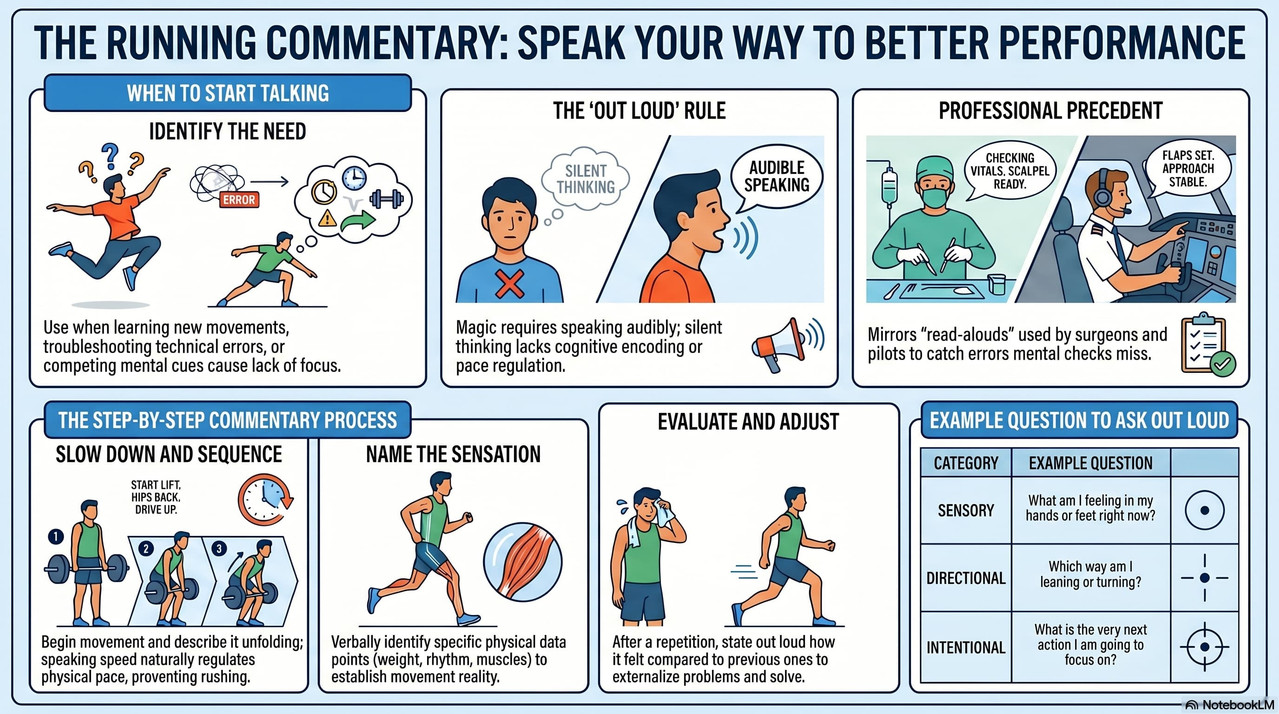
Picture a sports commentator on TV or radio, describing the game as it unfolds. That’s a running commentary. It’s taking notice of what you’re doing, where you are, what’s happening around you, and what you’re aiming to do. Short version: say what you see, hear, feel, or plan to do next.
But, and this is important, it’s not just thinking these things.
The magic happens when you say it out loud.
When I started doing this, I felt like a proper idiot. Talking to myself in the gym, out loud, like a commentary on my own mediocre performance. That feeling passed quickly though, especially once I noticed my technique and confidence improving.
How it helps when you’re learning something new
I won’t pretend to know the exact neuroscience. But here’s what I’ve noticed in practice.
Saying something out loud forces you to slow down and sequence your thoughts. You can’t describe something faster than you can process it, so the commentary naturally regulates your pace. That matters, because rushing is where most learning errors happen.
It also adds a second channel of processing. You’re not just doing the movement, you’re encoding it verbally at the same time. That tends to improve retention and pattern recognition. Over time, you start noticing recurring words or phrases, which usually means recurring problems, which often have similar answers.
There’s also something useful about the commitment involved. When you say “hip hinge, not knee bend” out loud, you’ve made a decision. That clarity cuts through the noise of having ten cues competing for attention at once.
How it helps when something isn’t working
Most people troubleshoot by repeating the movement and hoping it fixes itself. It rarely does.
Commenting out loud forces you to slow down enough to observe what’s actually happening, rather than what you think is happening. Those two things are often very different. You have to establish the real problem before you can solve it.
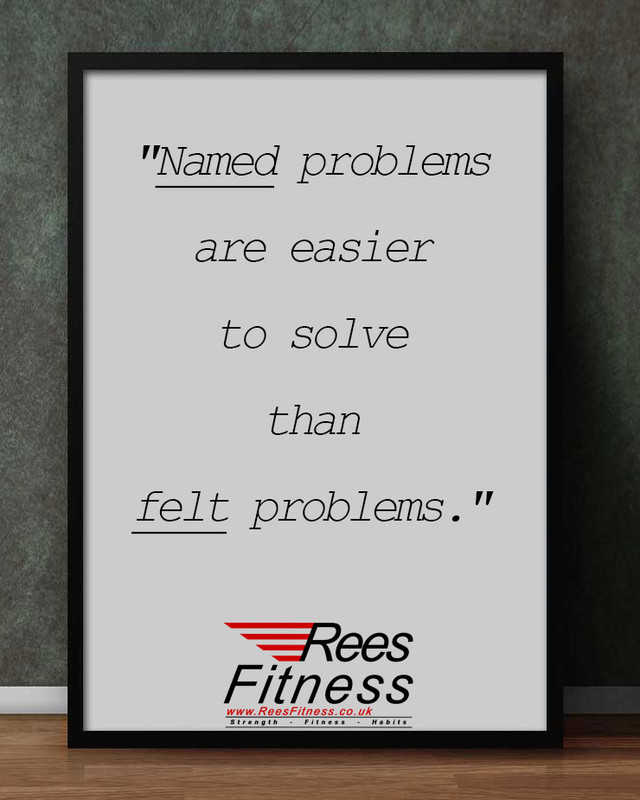
It also externalises the problem. When it’s stuck in your head, it’s vague and frustrating. When you say “my left shoulder is dropping as I push,” you’ve named it. Named problems are easier to solve than felt problems.
There’s a reason surgeons, pilots and control room operators use checklists and read-alouds under pressure. Saying it out loud catches errors that silent mental checks miss.
How it helps when you can’t focus
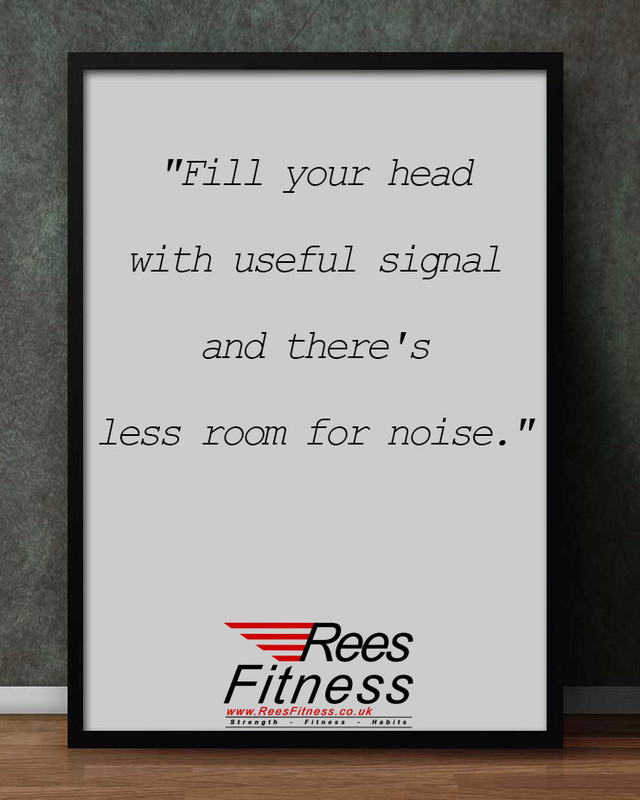
Your brain can only process so much at once. Fill it with useful signal and there’s less room for noise.
That’s the simple version of why cue-based, task-focused commentary works. It crowds out the competing voices and brings your attention back to the task at hand.
The common thread
Learning, troubleshooting, focus. Three different problems, same solution.
Commentary forces presence. You can’t commentate on the past or the future. It anchors you to right now, and right now is where the movement actually lives.
If you’re not sure where to start, try answering one of these out loud:
- What can you see ahead
- What you are feeling in your hands/feet
- Which way are you leaning
- Where is your weight distributed
- Which direction are you going to turn
- What parts of your body are currently working hard
- What is the current rhythm of your movements
- How fast/slow is your breathing
- What is the next action you are going to focus on
- Does one side or the other feel “different”
- In what way did this repetition feel similar/different to others
Or maybe the granddaddy of them all, ask yourself this simple question:
- What is my body doing right now?
Give it a go at your next workout or training session, even in a busy gym. In my experience, most people there are too preoccupied with themselves to notice. Yes, you’ll feel a bit daft at first, but I promise you’ll get over it.
Contact me for help
If this resonates and you’d like help putting it into practice, I work with people one to one to solve exactly these kinds of problems.